Benefits of hiring a fractional marketing team

B2B companies in fast-moving industries face a constant challenge: finding the right blend of skills, strategy, and execution power without overextending their budgets. The marketing landscape evolves too quickly for a single hire to keep up. You need a team of experts, but not necessarily full-time salaries across every role.
That’s where a fractional marketing team comes in.
At Digital Hive Labs, we’ve seen this model transform operations for clients in sectors like cybersecurity, SaaS, and FinTech. These organizations need measurable growth, but they also need agility. A fractional marketing team gives them both, scalable expertise at a fraction of the traditional cost, working right alongside internal stakeholders to deliver outcomes, not just deliverables.
The growing demand for fractional marketing
Why “fractional” models are on the rise
The rise of distributed workforces and subscription-based business models has reshaped how companies invest in expertise. Just as software moved from licenses to “as-a-service,” marketing talent is trending toward a service-based model.
For many B2B companies, hiring in-house means months of recruitment, onboarding, and management. Meanwhile, competition keeps growing online. A fractional marketing team bridges that gap with on-demand specialists, from strategists to analysts, ready to dive into real work immediately.
According to a Forbes business trend report, fractional executive hiring has surged among mid-market businesses seeking flexibility and performance accountability.
Cost efficiency without cutting corners
While cost savings grab attention first, the real benefit is value density, more expertise per dollar.
1. Lower overhead costs
Hiring in-house typically includes full-time salaries, benefits, taxes, and equipment. A fractional team eliminates those expenses. Instead, you pay for outcomes and active engagement time, not for idle hours or overlapping roles.
2. Access to multi-disciplinary specialists
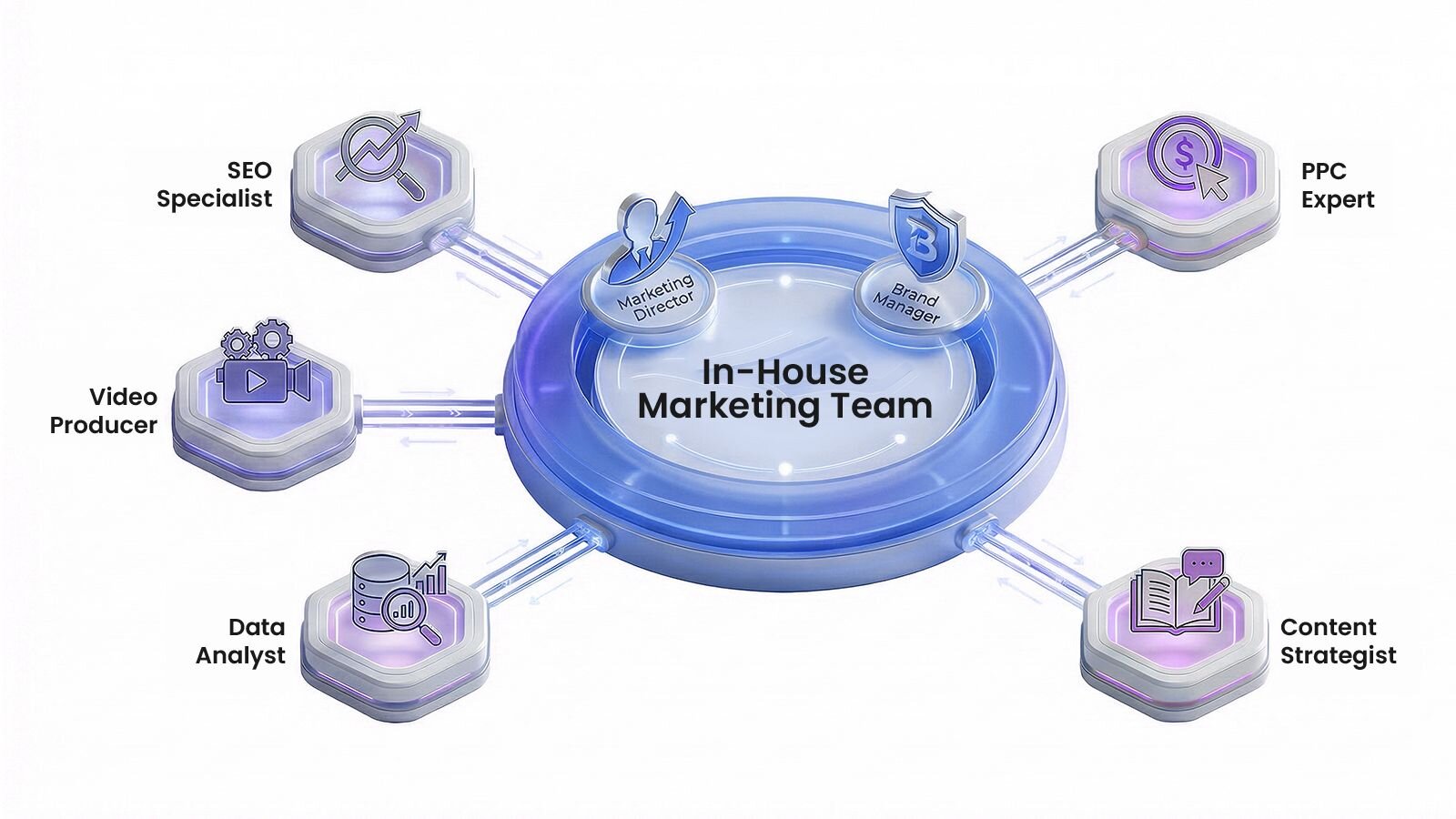
In most startups or mid-sized firms, one marketing generalist wears several hats. By contrast, a fractional team brings paid media experts, SEO analysts, creative designers, content strategists, and marketing technologists together under one structure. You get CMO-level insight without having to hire for every function individually.
3. Scalable cost structure
Fractional models adapt with your budget. Need to ramp up campaign production or pause during product rebuilds? The retainer adjusts, ensuring money follows business cycles rather than rigid payroll commitments.
At Digital Hive Labs, we’ve seen clients increase output across multiple channels, web, paid, and organic, while spending 30–50 percent less than equivalent full-time staffing.
Operating as an extension of your team
From vendor to partner
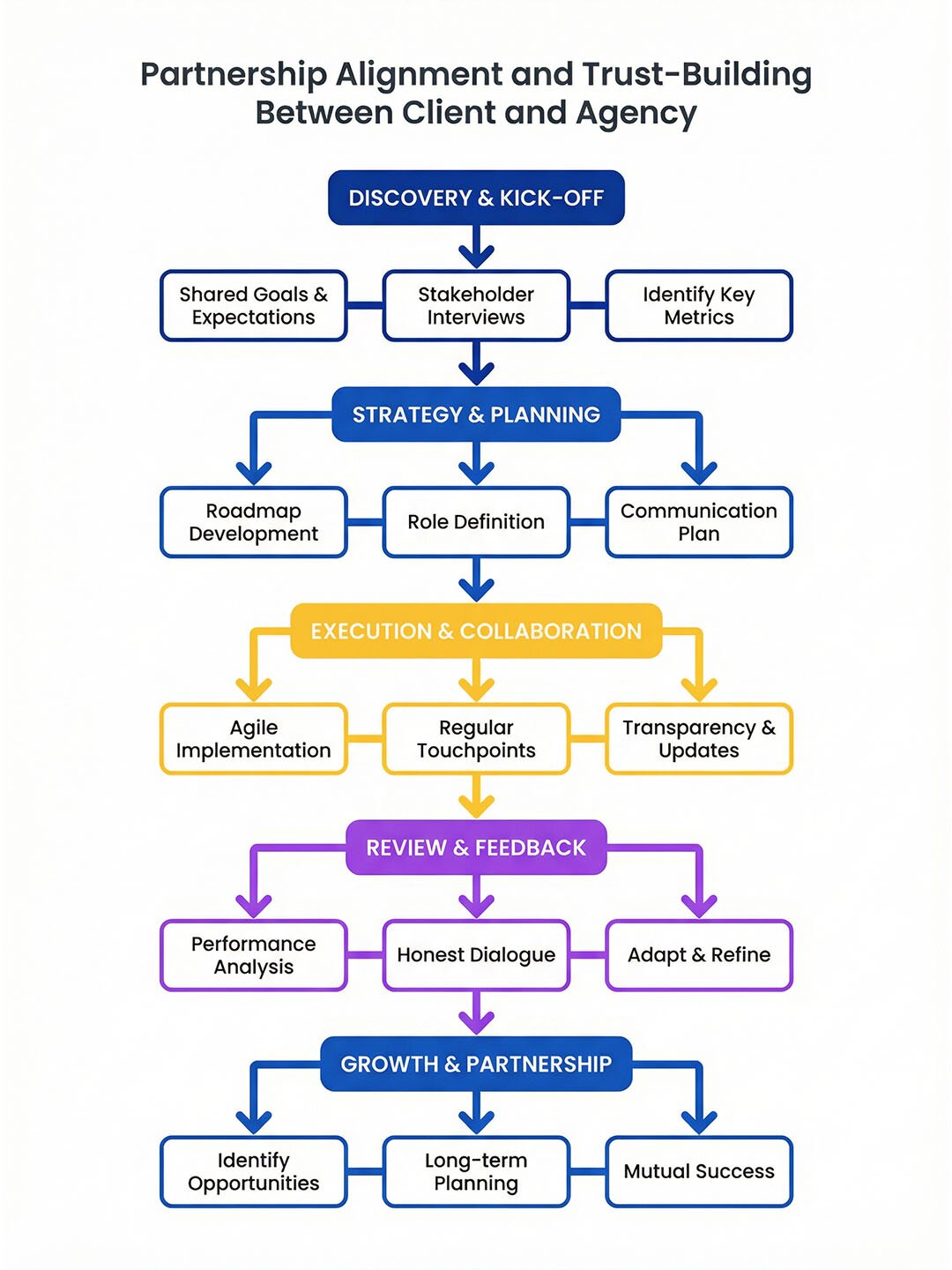
Unlike traditional agencies that stay task-focused, a fractional marketing team integrates deeply with clients’ planning and operations. We attend sprint meetings, assess strategy alongside leadership, and share dashboards as if we’re in-house.
The collaboration creates accountability and alignment. Every project is tied to business objectives such as lead quality, conversion lift, or revenue attribution, not just clicks or impressions.
1. Shared goals = shared wins
When marketing outcomes align with product, sales, and operations metrics, teams start to move in the same direction. Our cybersecurity SaaS client, for example, treats us as their de-facto marketing department. Together we’ve built unified KPIs across pipeline and acquisition cost, which ensures visibility at the board level.
2. Streamlined communication
Working in your project platforms (like ClickUp or Slack) and CRMs (like HubSpot) removes friction. That’s one reason fractional teams outperform freelancers: accountability and coordination live in your ecosystem, not outside it.
3. Full-funnel perspective
Since we oversee channels from strategy to analytics, the insights are connected. Paid campaign signals inform SEO content; website CRO data informs ad design. The result is marketing that learns from itself.
Bridging skill gaps with expert versatility
The reality of modern marketing complexity
With AI tools, evolving privacy standards, and algorithm shifts, a single specialist can’t cover it all. Fractional teams combine specialists who stay ahead in their own domains while sharing unified goals.
For instance, an SEO strategist adjusts content structure based on paid search trends reported by digital ad analysts. A creative designer tests variations guided by that same data. You get cross-functional intelligence delivered as one cohesive output.
The Digital Hive Labs model
Our team manages everything from digital strategy and web UX to SEO roadmapping and paid media optimization. It allows internal client teams, often lean in size, to focus on positioning and decision-making rather than executional firefighting.
Within our FinTech engagement, for example, campaign coordination across content, analytics, and CRO increased qualified conversions by double digits within six months. Those results came from skill alignment more than budget increases.
Better data, clearer insights
Why analytics maturity drives smarter marketing
Data abundance doesn’t equal understanding. Many B2B brands have access to dashboards but lack storytelling, what’s working, what isn’t, and why. Fractional teams bring both the analytical tools and strategic context to interpret numbers.
We consolidate campaign metrics across channels into unified visualizations that tie traffic, leads, and pipeline outcomes together. This enables leadership to make faster decisions backed by verified insights.
From noise to knowledge
In underperforming campaigns, we often find that measurement frameworks were never defined beyond ad-level KPIs. A good fractional partner reframes reporting around meaningful business impact, like cost per opportunity or customer lifetime value, rather than vanity metrics.
Strategic continuity and adaptability
Avoiding the stop-start pattern
Freelancers come and go, and agencies sometimes rotate account teams quarterly. Fractional teams, on the other hand, embed for the long term. At Digital Hive Labs, both our active clients recently renewed for another year and expanded the scope of work, proof that continuity ensures compounded results.
Continuous improvement cycle
Fractional models allow perpetual testing and iteration. With analytics insights fueling creative refinements, campaigns evolve weekly rather than quarterly. It’s an agile system that mirrors high-growth product sprints rather than static annual plans.
Common misconceptions about fractional marketing
“It’s just outsourcing.”
Not quite. Outsourcing implies offloading. Fractional collaboration means partnership and shared responsibility for outcomes. It’s about integration, not delegation.
“We’ll lose control.”
In fact, visibility typically increases. Shared dashboards, co-authored strategies, and transparent feedback loops keep leadership informed. There’s no black box; there’s shared accountability.
“It’s only for startups.”
Mid-market and enterprise divisions increasingly adopt fractional teams during restructuring phases, product pivots, or regional expansions. Flexibility works at every scale.
How to know if your organization is ready
If you’re noticing any of these indicators, a fractional model may fit:
- Marketing performance has plateaued despite spend increases.
- You lack senior guidance across channels.
- Internal staff are stretched too thin for strategy.
- Reporting is fragmented or unclear.
- You want enterprise-grade execution without full-time cost commitments.
When these conditions align, bringing in a fractional marketing team restores both speed and clarity.
Key takeaways
- Fractional marketing teams deliver senior-level expertise at a fraction of full-time cost.
- They work as an extension of your in-house team, aligning goals and accountability.
- The model bridges skill gaps and connects insights across SEO, paid, content, and analytics.
- Data intelligence improves faster decision-making and ROI.
- Strategic continuity comes without long-term employment overhead.
FAQs
A fractional marketing team is a group of part‑time, high‑level marketing experts who integrate with your company to provide strategy and execution without the cost of full‑time hires.
Agencies often execute isolated campaigns. Fractional teams embed within your operations, aligning KPIs and collaborating directly with internal teams.
Typical partnerships run 6–12 months, though many renew annually as collaboration deepens and ROI becomes evident.
Yes. Fractional support scales to budget. Even early‑stage firms can start small, gaining strategic direction before expanding spend.
Seek transparency, cross‑disciplinary expertise, proven data systems, and cultural alignment with your team.
Modern marketing success requires more than tools or headcount. It demands coordinated expertise, real‑time strategy, and measurable outcomes.
A fractional marketing team offers all three, with the flexibility to grow alongside your business.
If your organization struggles with underperforming campaigns or unclear data, Digital Hive Labs can help. Request a free marketing performance audit to discover where fractional collaboration could unlock your next growth phase.
